Aviation Switching Module – NSN 4920-01-250-2696 (AS-IS / Untested): Aerospace Switching Unit for Professional Inspection
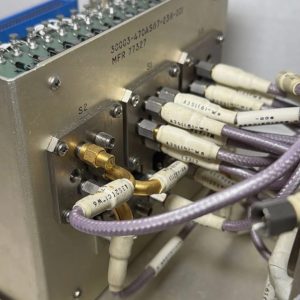
The Aviation Switching Module – NSN 4920-01-250-2696 (AS-IS / Untested) may be suitable for bench evaluation, training displays, component research, restoration work, parts harvesting, or inventory replacement after exact application verification.
The Aircraft Switching Module offers potential maintenance or restoration value, while the Aerospace Switching Module must be inspected for condition, completeness, modification, and storage-related deterioration.
The Aircraft Electrical Switching Module may route selected circuits, while the Aviation Electrical Control Module, Aircraft Power Switching Module, Aerospace Electrical Control Unit, and Aircraft Signal Switching Module terms should not be interpreted as confirmed functions without documentation.
Whether described as an Aviation Control Module, Aircraft Switching Unit, Aerospace Power Distribution Module, Aircraft Electrical Control Unit, or Aviation Power Control Module, the component should remain identified primarily by its NSN and physical markings.
Identifying the Aerospace Switching Unit
NSN 4920-01-250-2696 should be compared with the data plate, manufacturer number, contract markings, serial number, connector layout, and available documentation on the actual unit.
An identification plate should not be removed, repainted, altered, or covered because it may provide the strongest evidence of the component’s origin.
Evaluating Surplus Aircraft Electronics
Internal faults, missing components, damaged wiring, corrosion, previous modification, storage deterioration, or electrical failure may be present even when the exterior appears clean.
Improper voltage, polarity, grounding, current, signal input, or connector pin assignment can damage the module and connected equipment.
Aircraft Circuit Selection Equipment
Application accuracy protects buyers from assuming that a broadly named Aircraft Switching Module will fit their project.
Each visible feature should be photographed and described without assuming its electrical purpose.
Rugged Aviation Module Design
Careful exterior evaluation can reveal evidence of previous use or damage before the unit is opened.
Protective caps should remain installed during storage and shipping when available.
Inspecting Aviation Module Wiring
An Aircraft Electrical Switching Module should be inspected for overheated areas, burned insulation, damaged terminals, loose hardware, corrosion, moisture entry, broken controls, and signs of previous disassembly.
Methodical inspection protects the integrity and research value of the Aircraft Electrical Switching Module.
Aircraft Electrical Control Applications
The exact interface must be established through diagrams, manuals, connector data, or verified system information.
Careful preservation supports future study and accurate Aviation Electrical Control Module documentation.
Choosing an Aircraft Power Switching Module
Controlled bench evaluation should be completed by personnel familiar with aerospace electrical hardware.
A module with unknown electrical condition should remain clearly labeled as untested until formal evaluation occurs.
Aerospace Electrical Control Unit Evaluation
Troubleshooting requires a logical sequence based on technical information rather than random power application.
Detailed records support the long-term value of the Aerospace Electrical Control Unit.
Aviation Signal Routing Equipment
An Aircraft Signal Switching Module may route low-level, control, communication, measurement, or test signals between compatible equipment channels.
A complete accessory inventory improves the commercial presentation of the Aircraft Signal Switching Module.
Aviation Control Module Applications
A module removed from its original system can be difficult to test without supporting equipment and documentation.
Compatibility should be verified through NSN, part number, manufacturer, connector layout, revision level, modification status, and equipment application.
Aircraft Switching Unit for Maintenance or Restoration
A complete but untested unit may have different value from an incomplete component known to contain damage.
Training use should avoid destructive modifications when the component has collectible or restoration value.
Power Distribution Module Inspection
Power distribution equipment may use switches, relays, terminals, bus structures, circuit protection, and control interfaces depending on design.
Preserving the original structure protects the Aerospace Power Distribution Module and its resale value.
Choosing an Aircraft Electrical Control Unit
The inspection should distinguish cosmetic wear from damage that may affect electrical operation or mounting.
Unknown circuits should not receive voltage simply because a connector pin appears to be a power input.
Aviation Electrical Power Management
Broad market keywords can support discovery while the technical description remains precise.
Warning labels should remain visible and legible.
Electronic Switching Module Applications
An Aircraft Electronic Switching System may consist of multiple modules, harnesses, control panels, relays, indicators, power sources, and associated equipment.
Professional analysis supports responsible Aircraft Electronic Switching System maintenance.
Long-Term Storage of Aircraft Electronics
The unit should not be stacked beneath heavy equipment or left on conductive surfaces.
Loose accessories should be wrapped separately and inventoried before packaging.
Evaluating Surplus Aerospace Equipment
AS-IS equipment may offer attractive value when the purchaser has the knowledge and resources required for evaluation.
The seller should explain whether the unit has been powered, opened, repaired, modified, tested, or removed from known equipment.
Inspecting the Aviation Switching Module Before Purchase
The AS-IS and untested condition should appear clearly within the title, description, invoice, and transaction terms.
- Resolve identity, configuration, application, and package-completeness questions before payment.
- Inspect switches, knobs, indicators, connectors, pins, wiring, and terminals for damage, looseness, contamination, overheating, or unauthorized repair.
- Require packaging that protects connectors, switches, labels, enclosure corners, mounting brackets, controls, and loose accessories from movement and impact.
Professional Bench Evaluation
Every connection should be documented before power is applied.
Partial operation should not be presented as complete certification, calibration, or airworthiness.
Restoring the Aerospace Switching Module
Original labels, wiring routes, fasteners, finishes, and component locations should be preserved whenever practical.
Accurate records support future maintenance and responsible resale.
Selecting a Surplus Aerospace Switching Unit
The Aviation Switching Module – Aviation Switching Module – NSN 4920-01-250-2696 (AS-IS / Untested) NSN 4920-01-250-2696 (AS-IS / Untested) offers stronger commercial appeal when its markings, controls, connectors, enclosure, accessories, history, and limitations are documented accurately.
The component should be judged according to complete project suitability rather than clean appearance, military-surplus interest, part-number rarity, or price alone.
Whether the item is purchased for restoration, training, parts recovery, display, testing, inventory, or professional repair, transparent information and controlled handling provide the strongest foundation.
With prompt attention to switches, connectors, wiring, enclosure condition, corrosion, labels, and internal components, the module can preserve its technical and commercial potential.